
Chris Senner
-
- Economics, Efficiency & Emissions Drive Effective Choices Marine News, Jul 2016 #44
Louisiana-based Karl Senner widens its propulsion solutions toolkit with two options, both designed to provide economics, efficiencies and lower emissions.
In the increasingly competitive marine propulsion markets, workboat operators now have many choices from which to select an appropriate, long term solution for their propulsion needs. Paramount in that process is the need to meet regulatory requirements without breaking the bank. In response, propulsion distributor Karl Senner LLC offers two different electrical system arrangements; both of which will allow operators to remain tier compliant without the use of after-treatment.Way back in 1967, Karl H. Senner sold the very first Reintjes Gearbox in the North America to Dickie Gonsoulin of LeBeouf Towing. Since that time, the inland waterways have always been a core focus of the Karl Senner business model. More recently, in 2015, Karl Senner collaborated with the Shearer Group and the Steerprop azimuth thruster group to develop a unique pushboat design that was both intended to accommodate the Steerprop solution and also maximize the utility of the thrusters / Z-drives. That’s because installing thrusters for the sake of efficiency can be largely a wasted exercise unless all aspects of the vessel and associated equipment are taken into consideration. The latest developments look to leverage those advances with an even more efficient power signature. Together, they potentially represent the next step forward for workboat propulsion and power.Two ChoicesA Reintjes Hybrid System consists of an electric motor/generator, and diesel engine mechanically connected through a Reintjes Gearbox. The arrangement offers four operating modes: PTI Mode, Booster Mode, PTO Mode, and direct diesel (where the hybrid system is simply shut off). Most suitable for conventional shafting arrangements on board 1,800 to 2,600hp vessels, the Reintjes Hybrid System offers flexibility and economy for today’s operators, utilizing proven Reintjes technology. The most commonly built inland towboats fall within this horsepower range.Alternatively, Karl Senner customers can also select a Diesel-electric System, designed by electrical systems integrator EPD. This is a full diesel-electric system where all electrical power is produced via onboard generators, and the main propulsion is driven by electric motors. Main propulsion can be configured through a Reintjes gearbox to maintain conventional shafting arrangements, or through Steerprop Azimuth Thrusters (Z-drive or L-drive – notably without an additional gearbox). According to Chris Senner, “The Reintjes Hybrid System (RHS) is best suited for a conventional driveline through a Reintjes Gearbox – up to a 630kW PTO/PTI/Booster input.”In practice, the Diesel-electric System is more scalable than the Reintjes Hybrid System, and can be configured on any size vessel. In fact, Karl Senner, LLC and EPD have over time delivered diesel-electric propulsion systems for more than 120 vessels in the offshore market. But, Chris Senner adds, “We offer both solutions, but can help the customer select which solution is best for their application. Both systems are viable options, but it depends on the customer’s preference, level of comfort, performance requirements, operational requirements, budget and their application.”Karl Senner explains, “Both are terrific options and both are backed by Karl Senner parts and service. The EPD option is a great fit on all Steerprop and Reintjes projects that exceed 630kw. For smaller inland Diesel-electric z-drive tow boats we have a great system used on over 100 DP2 vessels utilizing simple and affordable AC and DC solutions. EPD’s John Norwood says it all comes down to what’s right for the individual customer. “What we offer is all tailored towards the customer’s requirements, operational profile, budget and marketing plan.” Either selection can be integrated with any engine manufacturer.Reintjes Hybrid System ExplainedThe REINTJES Hybrid System offers many different operation modes. Easy switching between the electric motor/generator, using the main engine, the genset, or both by means of the hydraulically operated clutches, enables the vessel to optimally use its power and take full advantage of the gearbox and the entire power train. These operating modes include PTI mode (electric motor only), PTO mode (diesel engine for propulsion and shaft generator), Boost mode (electric motor and diesel engine in combination for higher speed and higher thrust) and the Diesel mode (diesel engine only). Each offers its own advantages, depending on operational needs at any one given time.The PTI (Power Take In) mode provides maximum comfort at slow speed. With the diesel engine not operating, the electric motor of the REINTJES hybrid system drives the ship and enables normal cruising, maneuvering and reversing. The noise level and the energy consumption of the power train are reduced to a minimum and efficient operation is achieved with power coming from the genset or any other electric power source onboard.The Boost mode offers an additional operating mode in PTI operation. Using all the power of both the diesel engine and the electric motor in combination to drive the propeller to provide maximum propeller thrust and /or support the diesel engine in different load conditions.In the PTO (Power Take Off) mode, the electric motor of the REINTJES hybrid system can be operated as a generator. It then feeds electric power into the ship’s grid and, hence, assists existing generator sets. Optionally, the remaining energy can be fed into batteries and used later.Karl Senner sums up the advantages of the hybrid approach, saying simply, “Harbor Tugs are a great fit for the Hybrid applications due to their operating profile. Given the high amount operating hours in low load demand, the Harbor Tug operator can switch to Hybrid mode and turn off the main engines when they are not needed. By keeping the main engines off throughout the majority of the vessel’s operating life, large cost savings can be realized by creating much longer overhaul intervals of the main engines.”Karl Senner has sold and installed many gearboxes with PTO/PTI/Booster capability – mainly for offshore applications – but historically, a third party would supply the electrical system. It wasn’t until recently that Reintjes decided to make the packaging easier and integrate the full system from one source. For example, the most recent vessel to have a Reintjes Gearboxes that were PTO/PTI-ready was the M/V Harvey Stone.Diesel-Electric System DefinedIn the full diesel-electric system, offered in conjunction with EPD, all electrical power is produced via onboard engine generator sets, and the main propulsion is driven by electric motors. The main propulsion can be configured through a Reintjes gearbox to maintain conventional shafting arrangements, or through a Steerprop Azimuth Thrusters (Z-drive or L-drive). Which way a customer might choose to go depends entirely on the operator’s requirements. Chris Senner explains, “For inland towboats it depends on the operating profile of the vessel and the operator’s comfort with different types of propulsion. The Z-drive and L-drive vessel will always provide better maneuverability and control in currents and river bends. That’s because shallow draft restrictions and impacts are often an area of concern on the inland waterways, which is why we are proposing rugged ice-class rated Z-drives suited for this environment.”One key advantage to the EPD Diesel-electric System is that it is more scalable than the Reintjes Hybrid System, and can be configured on any size vessel. In fact, the diesel-electric system can be configured on any vessel size for inland waterways, even if an application requires a higher horsepower demand than a hybrid system. In those cases, says Chris Senner, EPD can accommodate even larger electrical systems. Today, for example, diesel electric systems are being used on the largest cruise ships in the world, as well as offshore drillships and rigs. And, adds Karl Senner, “Diesel-Electric systems provide nearly endless possibilities of capability and options.”Although Karl Senner, LLC and EPD have for many years delivered diesel-electric propulsion systems to the offshore markets, the technology, even given its utility and success, has been slow to find acceptance in inland waterways. But, that’s about to change forever. Today, with changing regulation on engine emissions, the inland market will soon be forced to adopt new technology in the form of tier 4 systems, hybrid systems, or diesel-electric systems. There simply has not been a real need to adopt this technology until now.Tier Beaters = Good DesignBoth systems boast fuel efficiencies and involve the use of smaller engines that can serve as tier beaters – good design all around. Chris Senner agrees, adding, “Both systems would provide the operator with additional operating modes to run the diesel engine and/or generators at more efficient load lines. If the owner chooses keep the main engines and/or generators below 800hp, both systems could allow the operator to remain tier compliant without the use of after treatment, and still deliver the needed power to main driveline – conventional or Z-drive.”EPD’s Norwood told Marine News in June, “Hybrid systems with electric motors for slow speed maneuvering and diesel engines for full power/speed are designed to save fuel/costs and reduce hours on main engines as they are not used at low power. These lower engine hours also save by extending the time between overhauls.” That’s because diesel electric systems are designed based on the operational profiles of the vessel so that engine generator sets can be shut off when the vessel operates at lower power levels and so that different engine generator sets can be shut down or used in combination as power is needed. Norwood adds, “This means that you only have just enough engine generator sets running to power the vessel operational mode at the time.”Karl Senner agrees, saying “The hybrid system, as it applies to inland tow vessels, has an immediate market for this power range which covers vessels that are on the edge of needing EPA tier 4 compliance such as vessels in the ditch, or for smaller fleeting boats that would benefit from the efficiency (fuel and maintenance savings) a hybrid system can offer on applications where the maximum fitted power of a vessel is only needed a portion of the time.”Propulsion subject matter expert Robert Kunkel is President of Alternative Marine Technologies. Speaking to Marine News about the so-called practice of tier-beating designs, he said “The practice will definitely continue simply because it is good design. Working efficiently means meeting regulations and filling a customer’s needs and/or price range.” Today, there are two more viable options from which operators can choose to do just that.(As published in the July 2016 edition of Marine News) -
- Reintjes: Changing Gears Maritime Reporter, Nov 2015 #74
interviewing Klaus Deleroi, the new managing director of Reintjes, a group of sales and service agents from around the globe, including Ralph, Karl and Chris Senner from Karl Senner Inc., the Reintjes distributor in North America were in Hameln, Germany for a week of sales and marketing meetings. The Senner
-
- Driving the Inland Waterways Marine News, Jan 2016 #38
with the U.S. inland markets as well as proven success and experience with Steerprop in the offshore markets, starting back in 2001. According to Chris Senner, reliability is a key aspect of the Steerprop design. He adds, “We work closely with all parties during all stages of the design, build, and operation
-
 )
November 2023 - Maritime Reporter and Engineering News page: 67
)
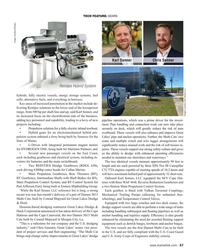
November 2023 - Maritime Reporter and Engineering News page: 67TECH FEATURE: GEARS Image courtesy Reintjes Karl Senner Chris Senner Reintjes Hybrid System hybrids, fully electric vessels, energy storage systems, fuel cells, alternative fuels, and everything in between. Key areas of increased penetration in the market include de- livering Reintjes solutions to the
-
 )
November 2023 - Maritime Reporter and Engineering News page: 66
)
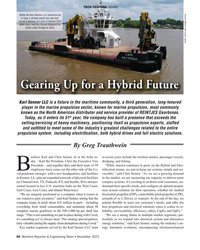
November 2023 - Maritime Reporter and Engineering News page: 66related to the entire propulsion system, including electri? cation, both hybrid drives and full electric solutions. By Greg Trauthwein rothers Karl and Chris Senner sit at the helm to- in recent years include the towboat market, passenger vessels, day – Karl the President, Chris the Executive Vice dredging
-
 )
February 2020 - Maritime Reporter and Engineering News page: 51
)
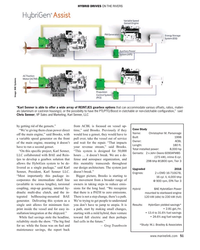
February 2020 - Maritime Reporter and Engineering News page: 51, materi- als (aluminum or cast-iron housings), or the possibility to have the PTI/PTO/Boost in clutchable or non-clutchable con? guration,” said Chris Senner, VP Sales and Marketing, Karl Senner, LLC by getting rid of the gensets.” from ACBL is focused on vessel up- Case Study “We’re giving them clean
-
 )
July 2016 - Marine News page: 46
)
July 2016 - Marine News page: 46via onboard of smaller engines that can serve as tier beaters – good de- engine generator sets, and the main propulsion is driven sign all around. Chris Senner agrees, adding, “Both sys- by electric motors. The main propulsion can be con? g- tems would provide the operator with additional operating ured
-
 )
July 2016 - Marine News page: 44
)
July 2016 - Marine News page: 44that was both intended to drive – notably without an additional gearbox). According accommodate the Steerprop solution and also maximize the to Chris Senner, “The Reintjes Hybrid System (RHS) is utility of the thrusters / Z-drives. That’s because installing best suited for a conventional driveline
-
 )
January 2016 - Marine News page: 43
)
January 2016 - Marine News page: 43River. ence with Steerprop in the offshore markets, starting back And in an interesting twist to the equation, Eastern in 2001. According to Chris Senner, reliability is a key Shipbuilding last year introduced its cutting edge 4,200 aspect of the Steerprop design. He adds, “We work closely hp Thunderbol
-
 )
November 2015 - Maritime Reporter and Engineering News page: 79
)
November 2015 - Maritime Reporter and Engineering News page: 79Klaus Deleroi, the new managing director of Reintjes, a group of sales and service agents from around the globe, includ- ing Ralph, Karl and Chris Senner from Karl Senner Inc., the Reintjes dis- tributor in North America were in Hameln, Germany for a week of sales and marketing meetings. The Senner
-
 )
November 2015 - Marine News page: 61
)
November 2015 - Marine News page: 61ice break- ers built in the world to date – vessels that operate in the harshest marine environments on earth. And, according to W S ?HY TEERPROP Chris Senner, many of the design features that differenti- Way back in 1967, Karl H. Senner sold the very ? rst Re- intjes Gearbox in the North America to Dickie
-
 )
November 2015 - Marine News page: 60
)
November 2015 - Marine News page: 60the unit. Even small hull changes to optimize water? ow and hydrodynamics can greatly decrease fuel consumption and increase performance.” – Chris Senner the Karl Senner turnkey inland towboat would be a one- stop-shop. Chris Senner adds enthusiastically, “We can work with anyone at any stage of
-
 )
November 2015 - Marine News page: 58
)
November 2015 - Marine News page: 58PROPULSION and service. Chris Senner ing areas. “We found a partner in Steerprop that explained, “We often work While converting an ex- with multiple naval archi- isting standard con? gura- shared a very similar ideology to Reintjes tects to assist in the design tion vessel with z-drives is – both
-
 )
November 2015 - Marine News page: 56
)
November 2015 - Marine News page: 56offshore markets, starting back maintenance for the life of the vessel.” Over time, Karl Senner has worked with several naval in 2001. According to Chris Senner, reliability is a key aspect of architects to properly integrate the use of z-drives on the inland waterways in terms of performance, reliability
-
 )
September 2013 - Maritime Reporter and Engineering News page: 61
)
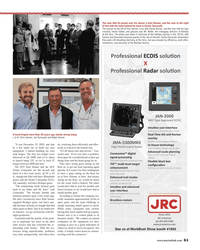
September 2013 - Maritime Reporter and Engineering News page: 61by efÞ ciency, work ethic, cleanliness, and precision of the Reintjes factory. A bond forged more than 40 years ago stands strong today. L to R: Chris Senner, Jon Gonsoulin and Ralph Senner. MR #9 (58-65).indd 61MR #9 (58-65).indd 619/6/2013 10:34:50 AM9/6/2013 10:34:50 A