
Page 37: of Marine Technology Magazine (Apr/May 2017)
Offshore Energy Annual
Read this page in Pdf, Flash or Html5 edition of Apr/May 2017 Marine Technology Magazine
 36
36
 38
38
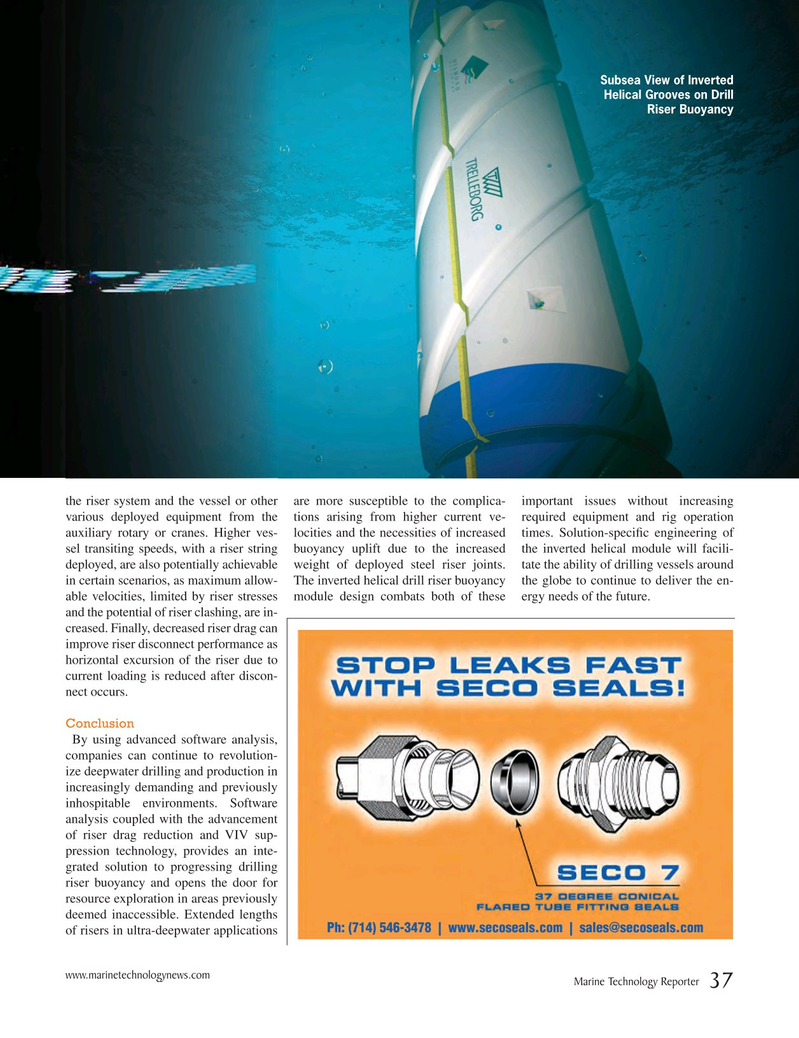
Subsea View of Inverted
Helical Grooves on Drill
Riser Buoyancy the riser system and the vessel or other are more susceptible to the complica- important issues without increasing various deployed equipment from the tions arising from higher current ve- required equipment and rig operation auxiliary rotary or cranes. Higher ves- locities and the necessities of increased times. Solution-speci? c engineering of sel transiting speeds, with a riser string buoyancy uplift due to the increased the inverted helical module will facili- deployed, are also potentially achievable weight of deployed steel riser joints. tate the ability of drilling vessels around in certain scenarios, as maximum allow- The inverted helical drill riser buoyancy the globe to continue to deliver the en- able velocities, limited by riser stresses module design combats both of these ergy needs of the future.
and the potential of riser clashing, are in- creased. Finally, decreased riser drag can improve riser disconnect performance as horizontal excursion of the riser due to current loading is reduced after discon- nect occurs.
Conclusion
By using advanced software analysis, companies can continue to revolution- ize deepwater drilling and production in increasingly demanding and previously inhospitable environments. Software analysis coupled with the advancement of riser drag reduction and VIV sup- pression technology, provides an inte- grated solution to progressing drilling riser buoyancy and opens the door for resource exploration in areas previously deemed inaccessible. Extended lengths
Ph: (714) 546-3478 | www.secoseals.com | [email protected] of risers in ultra-deepwater applications www.marinetechnologynews.com
Marine Technology Reporter 37
MTR #3 (34-48).indd 37 MTR #3 (34-48).indd 37 3/30/2017 11:07:16 AM3/30/2017 11:07:16 AM