
Snake River
-
- Inland Waterways Report: Columbia-Snake River System Marine News, Sep 2022 #32
It’s amazing to consider that a commercial vessel in the Pacific Ocean, approaching the mouth of the Columbia River, can continue its eastward journey to finally tie up at the Port of Lewiston, in Lewiston, Idaho, America’s most inland West Coast port, 465 miles from the Pacific Ocean.
The Columbia and Snake Rivers form that critical east-west waterway, an economic powerhouse regionally, nationally and internationally. According to the Pacific Northwest Waterways Association (PNWA), the Columbia-Snake River System (CSRS) is the nation’s single largest wheat export gateway, second largest for soy and corn exports and in the top ranks for wood products, autos, bulk minerals and a growing market for inland river cruises. Eight dams – four on the Snake River – create and maintain waterway performance – importantly, not just for commercial navigation but for energy, flood control and recreation. Petroleum is a top commodity moved upriver.
Now, this national asset is under critical scrutiny; it could be scrapped. There are a number of concerns but topmost, particularly along the Snake River, is the survival, the sustainability, of northwest salmon and the impact of dams on their storied lifecycle of river to ocean and their return upriver to spawn. There are suggestions now to breach the four Snake River dams. Otherwise, supporters charge, Snake River salmon face extinction.
Obviously, such a drastic move does not proceed casually. Columbia-Snake River waterways operators are right in the middle of these swirling currents, trying to keep one eye on immediate business demands and one eye on a hazy future. If the dams are breached, the Snake River is no longer commercially navigable.
National-Federal issues and initiatives
Briefly, there are three very high-profile Snake River initiatives:From the White House: On July 12 Administration officials released two studies, one focusing on salmon recovery, the other on electric power replacement if hydro generation were lost. “Business as usual will not restore the health and abundance of Pacific Northwest salmon. We need a durable, inclusive, and regionally-crafted long-term strategy for the management of the Columbia River Basin,” said Brenda Mallory, who chairs the WH Council on Environmental Quality.
In June, U.S. Sen. Patty Murray and Washington Gov. Jay Inslee released a draft report to inform upcoming recommendations from their Joint Federal-State Process regarding the Lower Snake dams and salmon recovery.
In February 2021, Idaho Congressman Mike Simpson unveiled the “Columbia River Basin Initiative,” a $33 billion plan to at least start on compensatory costs if the dams were breached and the costs to build alternatives for lost assets, including power and transportation, i.e., new highways and rails.
In August, ACE’s Inland Waterways Users Board met in Walla Walla. Northwest issues were on the agenda – deliberately so, commented Chairman W. Spencer Murphy, with Canal Barge Company. Murphy introduced Robert Rich, VP Marine Services, with Shaver Transportation, based in Portland, Ore. Rich is a member of the Users Board.
Rich provided the balance of comments, presenting regional concerns about the increasing political intensity on dam breaching but without a full presentation of impacts – to waterways operators, farmers and agricultural businesses, regional energy operations and markets, multi-modal shippers and, really, food security for millions, worldwide, who depend on a very dependable system.
Rich posed a rhetorical question to Board members: If we were starting with a clean slate in 2022 what would be prioritized? His answers: green transportation – waterways. Clean, low-carbon energy – hydro. Irrigation and flood control. Multimodal – barges, trains and trucks each contributing best value across the supply chain. Accessible recreation. All at a scale that expands from singular farms to eventually encompass national and international markets and consumers.
It’s the dams that make this possible, Rich reminded the Board. “This is working now – in 2022,” he emphasized.
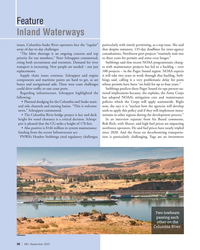
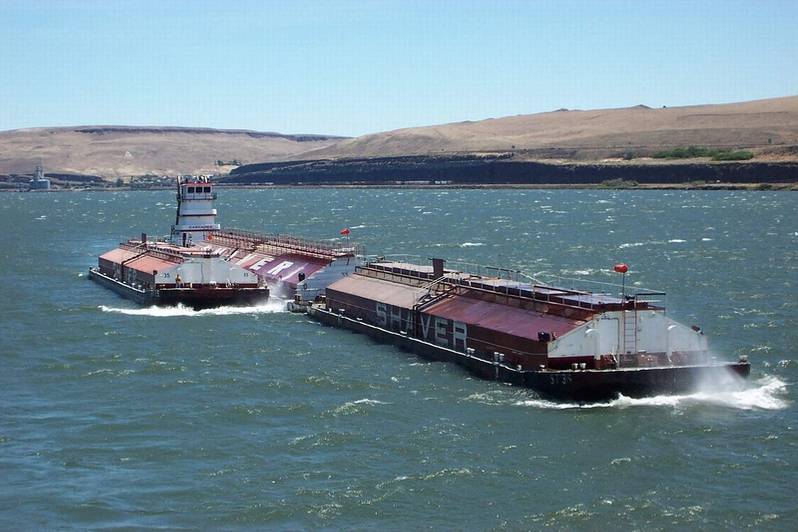 (Photo: Shaver Transportation)
Business perspectives
Heather Stebbings is Executive Director of the Pacific Northwest Waterways Association. The PNWA, established in 1934, with 150 members, is a collaboration of ports, businesses and public agencies.Stebbings and her team are closely watching the dam issues. Major concerns include:
That White House documents are tilted in favor of established interests, including the Nez Perce and State of Oregon, who have long supported dam removal.
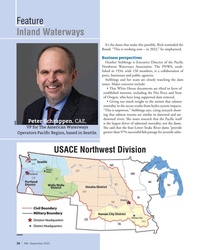
Giving too much weight to the notion that salmon mortality in the ocean results from hydro system impacts. “This is unproven,” Stebbings says, citing research showing that salmon returns are similar in dammed and undammed rivers. She notes research that the Pacific itself is the largest driver of salmonid mortality, not the dams. She said that the four Lower Snake River dams “provide greater than 97% successful fish passage for juvenile salmon making their way to the ocean and have had improved salmon runs over the last three years.”
Dam breaching poses significant, and negative, energy-environmental impacts. PNWA calculates it would take 162,153 semis or 42,160 rail cars to move the 4.2 million tons of cargo currently barged on the SR. “That means an increase in CO2 and other harmful emissions by over 1,251,000 tons per year – the same as opening a new coal plant every six years,” Stebbings writes.
Finally, there’s energy: hydropower provides the baseload function necessary to integrate intermittent solar and wind into regional transmission and distribution systems. If lost, there’s no system, no grid.
Peter Schrappen, CAE, is VP for The American Waterways Operators Pacific Region, based in Seattle. AWO is zeroed-in on these various proposals. In response to the Murray/Inslee report Schrappen wrote the following:
The loss of the Snake River dams would “devastate regional and national food security, the supply chain, and clean energy generation.”
Schrappen challenged the report’s claim that dams’ significant benefits could be replaced or mitigated.
Northwest rail and truck capacity are challenged to meet current demands. “It is unrealistic to believe that these two modes can absorb the additional 4 million tons of cargo moved through the Snake River locks each year.”
Regional and day-to-day challenges
In addition to these looming mega-issues, Columbia-Snake River operators face the “regular” array of day-to-day challenges.“The labor shortage is an ongoing concern and top priority for our members,” Peter Schrappen commented, citing both recruitment and retention. Demand for river transport is increasing. New people are needed – not just replacements.
Supply chain issues continue. Schrappen said engine components and maritime paints are hard to get, as are buoys and navigational aids. These west coast challenges could drive traffic to east coast ports.
Regarding infrastructure, Schrappen highlighted the following:
Planned dredging for the Columbia and Snake main and side channels and turning basins. “This is welcome news,” Schrappen commented.
The Columbia River bridge project is key and deck height for vessel clearance is a critical decision. Schrappen is pleased that the CG seeks a height of 178 feet.
Also positive is $146 million in system maintenance funding from the recent Infrastructure act.
PNWA’s Heather Stebbings cited regulatory challenges, particularly with timely permitting, as a top issue. She said that despite statutory, 135-day deadlines for inter-agency consultations, Northwest port projects “routinely wait one to three years for permits and some even longer.”
Stebbings said that recent NOAA programmatic changes with maintenance projects has led to a backlog – over 100 projects – in the Puget Sound region. NOAA expects it will take two years to work through that backlog, Stebbings said, calling it a very problematic delay for ports whose permits have been “on hold for up to four years.”
Stebbings predicts these Puget Sound tie-ups present national implications because, she explains, the Army Corps has adopted NOAA’s mitigation cost and maintenance policies which the Corps will apply nationwide. Right now, she says it is “unclear how the agencies will develop tools to apply this policy and if they will implement moratoriums in other regions during the development process.”
In an interview separate from his Board comments, Rob Rich, with Shaver, said high fuel prices are impacting northwest operators. He said fuel prices have nearly tripled since 2020. And the focus on decarbonizing transportation is particularly challenging, Tugs are an investment that can have a 50-year lifespan; running out of fuel is not an option. There are parallel concerns. Rich cited a Portland City Council policy to limit, and eventually shutter, petroleum storage facilities (Council will vote in August, but prior to deadline for this report).
Importantly, Rich noted that business “is good on our system right now.” The grain crop is big, and so is demand, particularly from Pacific Rim countries while world-wide supply has been constricted by the Ukraine-Russian war. Shippers are moving a lot of wood and wood products, concrete and petroleum.
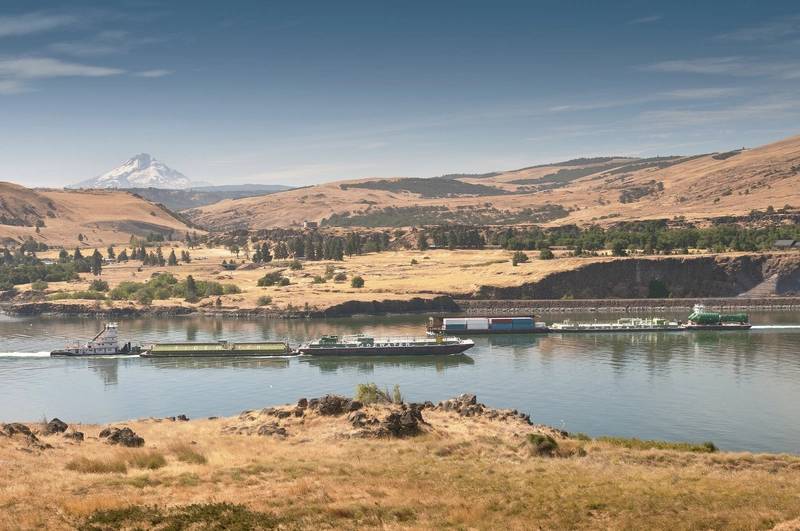 (Photo: Tidewater Transportation and Terminals)
Looking ahead
Schrappen expects new opportunities from offshore wind. He said AWO members “are investing and preparing to play an important role in this new market.” He added, though, that safe fairways for vessel traffic have to remain a top priority. And, on the west coast, new aquaculture areas are under development, presenting additional territorial constrictions for commercial traffic and operations.Alt-energy business possibilities go beyond wind. Tidewater Transportation and Terminals, based in Vancouver, Wash., for example, has its eye on a new low carbon fuel standard adopted in Washington, effective in 2023.
Jennifer Riddle is Tidewater’s corporate communications and marketing manager. She said this will establish a green corridor from California through British Columbia. “We see this as an opportunity to increase movements of various alternative and renewable fuels as the program gains traction,” Riddle said. She explained further that Tidewater owns and operates a biodiesel blending facility at its Umatilla Terminal in Oregon. Now, the company is contemplating additional investments at terminals in Pasco and Vancouver, Washington, sites which already provide transportation, storage, pipeline, and multi-modal transfer services.
For Tidewater, though, and all other operators, the mega-decisions hanging over the whole northwest system weigh heavily. Riddle cited the “reliability” of the C-SR locks and dams, a critical aspect allowing Tidewater to work 24/7, 365. “This robust and vital river highway,” Riddle emphasized, “is one of the most efficient networks for moving commodities in the nation.”
If the four Snake River dams are breached, the world may not end, but it will be a far different world – for everybody.
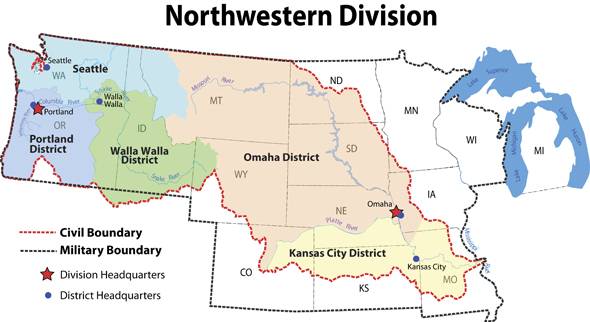
Army Corps of Engineers (ACE) District: Walla Walla, Wash.
Established: 1948. Boundaries generally match the watershed boundary of the Snake River drainage and include approximately 107,000 square miles in six states: Washington, Oregon, Idaho, Wyoming and small parts of Nevada and Utah.
Dams: Dworshak – North Fork Clearwater River, Ahsahka, Idaho
Mill Creek – part of a flood management project, Walla Walla, Wash.
McNary – Columbia River, Plymouth, Wash.
Ice Harbor – Snake River, Franklin and Walla Walla Counties, Wash.
Lower Monumental – Snake River, Franklin and Walla Walla Counties, Wash.
Little Goose – Snake River, Columbia and Whitman Counties, Wash.
Lower Granite – Snake River, Garfield and Whitman Counties, Wash.
Lucky Peak – Boise River, Boise, Idaho
Energy: The District is the second largest hydropower producer among ACE districts (Portland District is first), providing a total generating capacity of 4,413 megawatts to the Federal Columbia River Power System. McNary Lock and Dam can produce 980 megawatts from 14-hydropower turbines. One hydropower turbine at McNary produces as much electricity as 211 Walla Walla FPL 660 KW wind turbines.
Salmon: A juvenile fish transportation program, begun in 1968, uses specially equipped barges and tank trucks to carry migrating salmon and steelhead fingerlings around Snake and Columbia River dams. Construction on fish hatcheries started in 1976.
Navigation: The Columbia-Snake Rivers system allows commercial maritime transport from Portland, Ore. to Lewiston, Idaho – four-hundred miles inland. US agriculture (particularly wheat) is the critical export at international scale. Petroleum products are the most important upstream cargo. -
- Real Marine Highways for Real Intermodal Solutions Marine News, Mar 2014 #26
The Columbia/Snake River System defines shortsea shipping, and promises much, much more. Lewiston, Idaho, is perhaps best known to tourists as the turnaround for a Columbia River cruise or the jumping-off point for a trip to Hell’s Canyon, North America’s deepest gorge. For anyone transporting cargo
-
- MN100: Tidewater Transportation and Terminals Marine News, Aug 2016 #89
The Company: Nearly 85 years ago, Tidewater pioneered commercial transportation on the upper Columbia Snake River system and opened up one of the nation’s most isolated regions to global markets. Today, Tidewater Holdings is comprised of Tidewater Barge Lines, Tidewater Terminal Company, and since 2014
-
- American West's Sternwheeler Will Be Built By Nichols Bros. Maritime Reporter, Feb 2002 #14
, which will accommodate 236 overnight cruise guests and 84 crewmembers, will be utilized for cruises in season in southeast Alaska and the Columbia/Snake River complex. Reportedly, the Empress will be the first sternwheeler on the Inside Passage in more than 100 years. With construction and outfitting
-
- Shipbuilding: Vigor Industrial Grows Stronger Marine News, Apr 2014 #42
new, as illustrated by Vigor’s contract, just underway, to build three new tugs with Tidewater Barge Lines of Vancouver, Washington. The future Columbia-Snake River pushboats will be built in Portland instead of Seattle. Says Foti, “Building tugs in Portland is a sign that Vigor is evolving as a business.
-
- Shaver Re-Engines Tug Columbia With Stork-Werkspoor Diesels Maritime Reporter, Oct 1984 #8
, Shaver port engineer, estimated that the Columbia's original Stork engines—one of the few installations of the Dutch diesel on the Columbia/Snake River system for the last 15 years—had operated for some 75,000 to 80,000 hours. For more information about installing Stork-Werkspoor engines in new
-
- Stork-Werkspoor Engines Will Power Exxon Tugboats Maritime Reporter, Jan 1984 #56
two older SWD diesels in the firm's tug Columbia, with the newer 6-cylinder F240, 1,270-hp turbocharged engines for service on the Columbia/Snake river systems. Morrison-Knudsen Company, the international construction firm that is supervising the project, placed the order for the Exxon engines
-
- Portland Box Volumes Up 25 Percent In February Maritime Reporter, May 1992 #62
rail yards at Terminal 6 were recorded during the year. Portland also benefited from increased container-onbarge movements on the Columbia/ Snake River system. A Tidewater Barge Line multiple tow, including a containers-onbarge, on the Columbia River above the Port of Portland, was featured on
-
- 128 Plant Facilities Located On Waterways In Fourth Quarter '76 Maritime Reporter, May 15, 1977 #49
of the major plantsite decisions of the fourth quarter was the headquarters of Monoflex International, which will be located in Emmett, Idaho, near the Snake River. The complex will include approximately 10 plants to be constructed over the next 18 months. The plants will be used in the manufacture
-
- Nome Seeks $38.5-Million For Proposed Year-Round Port Maritime Reporter, Jan 15, 1983 #58
in Nome, Alaska. The city is asking the state legislature to appropriate $38.5 million for construction of a medium draft port near the mouth of the Snake River. The project is the number one priority for marine construction in northern Alaska, according to State Department of Transportation and Public
-
- Two Vessels Trucked To 'Sea' Maritime Reporter, Sep 15, 1981 #5
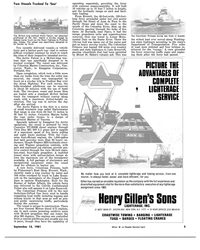
of five dams. At Burbank, near Pasco, it had the ramps, propulsion units and superstructure removed, then was towed to Lower Monumental Dam on the Snake River. There the 170-ton hull was taken out of the water and put on heavy moving trucks. The Columbian Princess was hauled 108 miles over country roads
-
- Repair Market Gains Muscle Maritime Reporter, Aug 2000 #25
Delta Queen Steamboat Co. on May 24. Only three days later, the 218 ft. (66.4 m) riverboat commenced its maiden voyage up the Columbia through the Snake River canyon to Lewiston, Idaho. The vessel's conversion project began when it arrived at the yard as a mere bare hull. Transported by barge from the
-
 )
November 2025 - Maritime Reporter and Engineering News page: 24
)
November 2025 - Maritime Reporter and Engineering News page: 24barge modernization of waterways infrastructure, prevent dam breach- industry’s advocate, resource, and united voice for safe, sus- ing on the Columbia-Snake River, and establish safe navigation tainable and ef? cient transportation on America’s waterways, fairways on the Atlantic and Paci? c coasts; and
-
 )
October 2022 - Marine News page: 17
)
October 2022 - Marine News page: 17was back in business in six is a sixth-generation family-owned tug and barge line serv- days. C&B’s motto: “Whatever it takes.” ing the Columbia-Snake River system in Washington, Or- Looking ahead, C&B is pursuing partnerships with na- egon and Idaho. President: Steve Shaver. tional transporters in which
-
 )
September 2022 - Marine News page: 36
)
September 2022 - Marine News page: 36Feature Inland Waterways issues, Columbia-Snake River operators face the “regular” particularly with timely permitting, as a top issue. She said array of day-to-day challenges. that despite statutory, 135-day deadlines for inter-agency “The labor shortage is an ongoing concern and top consultations
-
 )
September 2022 - Marine News page: 35
)
September 2022 - Marine News page: 35in Seattle. AWO is zeroed-in on these various propos- als. In response to the Murray/Inslee report Schrappen wrote the following: • The loss of the Snake River dams would “devastate regional and national food security, the supply chain, and clean energy generation.” • Schrappen challenged the report’s
-
 )
September 2022 - Marine News page: 34
)
September 2022 - Marine News page: 34Peter Schrappen, CAE, is the largest driver of salmonid mortality, not the dams. AWO VP for The American Waterways She said that the four Lower Snake River dams “provide greater than 97% successful ? sh passage for juvenile salm- Operators Paci? c Region, based in Seattle. USACE Northwest Division USACE 34
-
 )
September 2022 - Marine News page: 33
)
September 2022 - Marine News page: 33465 miles from regarding the Lower Snake dams and salmon recovery. the Paci? c Ocean. • In February 2021, Idaho Congressman Mike Simp- The Columbia and Snake Rivers form that critical east- son unveiled the “Columbia River Basin Initiative,” a west waterway, an economic powerhouse regionally, nation- $33 billion
-
 )
November 2021 - Marine News page: 15
)
November 2021 - Marine News page: 15we provide harbor services, are Southern California the company doing in response? (L.A./Long Beach), Northern California (SF Bay), Oregon (Columbia/Snake River) and Washington (Puget Sound). WR: Foss is responding to the needs of our customers. The current supply chain crises has more to do with terminal
-
 )
August 2020 - Marine News page: 56
)
August 2020 - Marine News page: 56ranging from large-scale mod- McDonough Marine Service ules used for energy expansion all the way to single trans- formers along the entire Columbia/Snake River system. Seattle-based Foss offers a complete range of maritime and Ocean Sun, towed Lucius Spar from Corpus Christi, transportation and logistics
-
 )
August 2020 - Marine News page: 48
)
August 2020 - Marine News page: 48in Vancouver, Wash., Tidewater’s operating area ing major ports such as New Orleans, Houston, Mem- spans 465 miles of the Columbia and Snake River systems, phis, St. Louis, Minneapolis/St. Paul, Chicago, Pitts- Canadian West Coast and Puget Sound region. burgh and Nashville. PS: Campbell
-
 )
August 2019 - Marine News page: 81
)
August 2019 - Marine News page: 81at Thrustmaster’s 300,000 square ft cli- www.Thrustmaster.net TIDEWATER TRANSPORTATION AND TERMINALS The Company: Tidewater’s services on the Columbia- Snake River (CSR) system link shippers, ports, and communities to the global mar- ket, while providing quality family sustain- ing jobs that add to the region’s
-
 )
September 2016 - Marine News page: 50
)
September 2016 - Marine News page: 50utilizing swift-moving currents, high winds, and eight navigation four main steering and four ? anking rudders, coupled with locks along the Columbia Snake River System. Once the two Caterpillar 3516C Tier 3 engines, allowed the design plans were developed, Tidewater contracted with Vigor’s team to increase
-
 )
August 2016 - Marine News page: 89
)
August 2016 - Marine News page: 89wood products, and project cargo. Website: www.tidewater.com Tidewater’s operating area spans 465 miles CEO/President: Bob Curcio on the Columbia and Snake River systems. T C :HE OMPANY The company’s barge service is a critical part Nearly 85 years ago, Tidewater pioneered commercial of the regional surface
-
 )
April 2016 - Marine News page: 36
)
April 2016 - Marine News page: 36good pic- erated by SDS Lumber based out of Bingen, Washington. ture. That’s one of the reasons for developing ACE. When The vessel works the Columbia Snake River system, main- you turn ACE on, the processor automatically looks for ly pushing either construction or wood chip barges. The patterns of interference
-
 )
March 2016 - Marine News page: 43
)
March 2016 - Marine News page: 43Tidewater was founded in 1932, it’s pretty safe to say it will continue to endure. The company is poised for signi? cant growth as the Columbia-Snake River regions are expected to see a huge uptick in new business during the next decade and beyond. www.marinelink.com MN Mar16 Layout 32-49.indd
-
 )
March 2016 - Marine News page: 38
)
March 2016 - Marine News page: 38PUSHBOATS & INLAND TRANSPORT T W T IDEWATER S NIQUE ORKBOATS ACKLE QUALLY HALLENGING ATERS E ’ U C W The Columbia and Snake River system of waterways demands special equipment, dedicated mariners and local service. Fortunately, all three metrics are present – for today and tomorrow. By Kathy A.
-
 )
March 2016 - Marine News page: 2
)
March 2016 - Marine News page: 2well on America’s East Coast. By Kathy A. Smith By Robert Kunkel 38 Tidewater’s Unique Workboats Tackle Equally Challenging Waters The Columbia and Snake River system of waterways demands special equipment, dedicated mariners and local service. By Kathy A. Smith 4H
-
 )
February 2016 - Marine News page: 49
)
February 2016 - Marine News page: 49the unique challenges of lows towboat Crown Point, which began operations along maneuvering barges through swift-moving currents, high the Columbia Snake River (CSR) in May 2015. Like the winds, and eight navigation locks along the CSR System, Crown Point, the Granite Point is a custom-built, environ- CT
-
 )
January 2016 - Maritime Reporter and Engineering News page: 50
)
January 2016 - Maritime Reporter and Engineering News page: 50Ter- minals marked delivery of the Tsecond of a series of three tow- boats, the Granite Point, a boat that will be deployed in Tidewater’s Columbia & Snake River Service in January 2016. Damen The vessel was built by Portland’s Vigor shipyard and follows towboat Crown P&O Repasa, a new company formed Point
-
 )
December 2015 - Marine News page: 38
)
December 2015 - Marine News page: 38. The South Boats’ designed stock 21m The vessel has been deployed in Tidewater’s Columbia & wind farm vessel is a twin hulled, all aluminum catamaran. Snake River Service. Crown Point is the ? rst of a series of three towboats being built at Vigor for Tidewater. Tidewater Jensen-Designed LNG ATB has ABS
-
 )
March 15, 1981 - Maritime Reporter and Engineering News page: 39
)
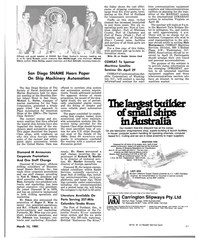
March 15, 1981 - Maritime Reporter and Engineering News page: 39and a posted barge rig, will bring the company's rig fleet to 32 units. Literature Available On Ports Serving 357-Mile Columbia/Snake Rivers The Port of Portland, Ore., is offering information on the Co- lumbia/Snake River container barge system and the six ports serving this
-
 )
September 15, 1981 - Maritime Reporter and Engineering News page: 3
)
September 15, 1981 - Maritime Reporter and Engineering News page: 3five dams. At Burbank, near Pasco, it had the ramps, propulsion units and superstructure removed, then was towed to Lower Monu- mental Dam on the Snake River. There the 170-ton hull was taken out of the water and put on heavy moving trucks. The Columbian Princess was hauled 108 miles over country
-
![MN Apr-14#46 locks on the CSR [Columbia-Snake River] system,? Tide- water](https://images.marinelink.com/images/magazines/w200h250c/MarineNews-201404-page48.png) )
April 2014 - Marine News page: 46
)
April 2014 - Marine News page: 46taller and have more engine horsepower for the length of boat in order to most ef ciently traverse the eight navigational locks on the CSR [Columbia-Snake River] system,? Tide- water writes. ?With their unique double-hulled design, no potable water, fuel, or lubricants will be adjacent to the hull, further
-
 )
April 2014 - Marine News page: 44
)
April 2014 - Marine News page: 44illus- trated by Vigor?s contract, just un- derway, to build three new tugs with Tidewater Barge Lines of Vancouver, Washington. The future Columbia- Snake River pushboats will be built in Portland instead of Seattle. Says Foti, ?Building tugs in Portland is a sign that Vigor is evolving as a busi- ness
-
 )
January 15, 1983 - Maritime Reporter and Engineering News page: 54
)
January 15, 1983 - Maritime Reporter and Engineering News page: 54, Alaska. The city is asking the state legislature to appropriate $38.5 million for construction of a medium draft port near the mouth of the Snake River. The project is the number one priority for marine construction in north- ern Alaska, according to State Department of Transportation and Public